The Concept - Aquaparks & Water Parks
The amenity every modern water park needs - and most don't have yet.
A professional outdoor strength zone, engineered for the pool deck. The dry-side amenity that extends guest stay, broadens demographics, and gives water parks something competitors can't copy overnight.
Aquaparks
Water Parks
Thermal Resorts
Resort Hotels
Wellness Destinations
Talk to us about your facility →
The Problem
Water parks are great for kids. They're underwhelming for adults.
Once your guests step out of the water, what's actually there for them?
A sun lounger. A café. Maybe a playground for the kids. For adult guests - fitness-conscious travelers, multi-night hotel guests, the wellness segment that pays the most per visit - the answer is "not much." So they leave. They drive to the nearest gym. They cut their day short. They skip a return visit.
This isn't a guest experience problem. It's a revenue problem. Time-on-property is the single biggest predictor of per-guest spending in water leisure. Every adult guest who leaves at 2pm instead of 6pm is leaving food, beverage, and overnight revenue on the table.
The Concept
An outdoor gym, built where the water ends.
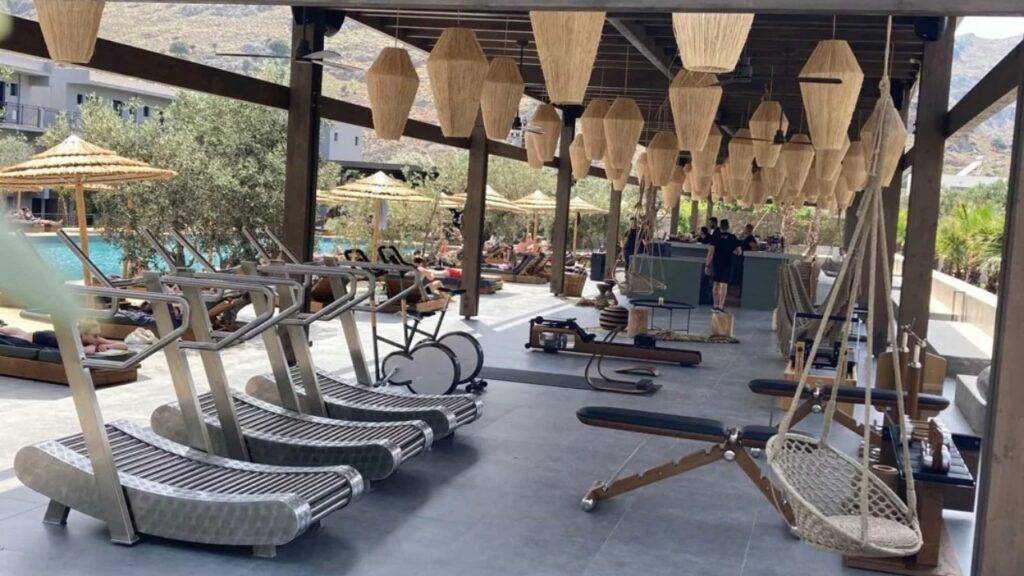
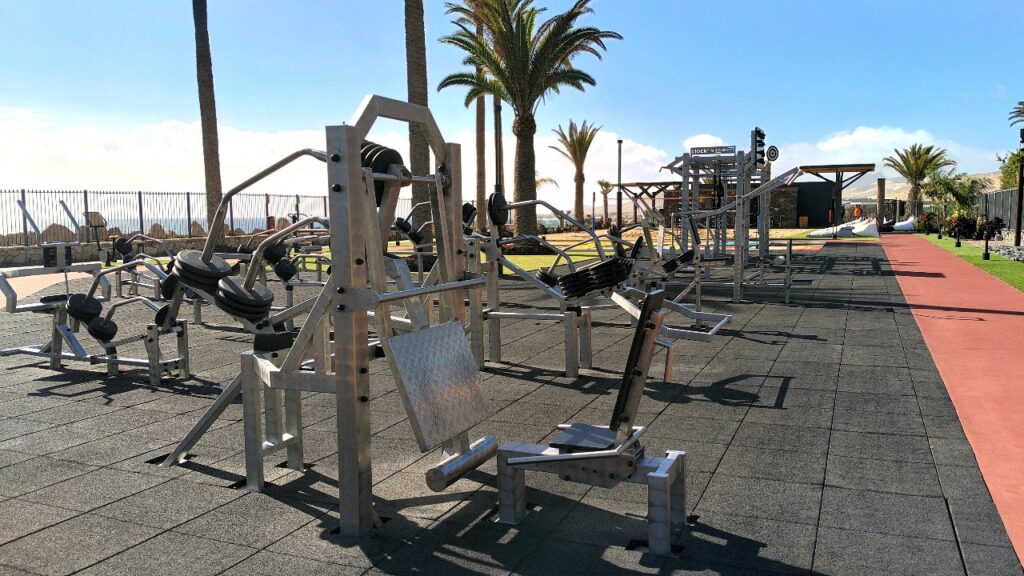
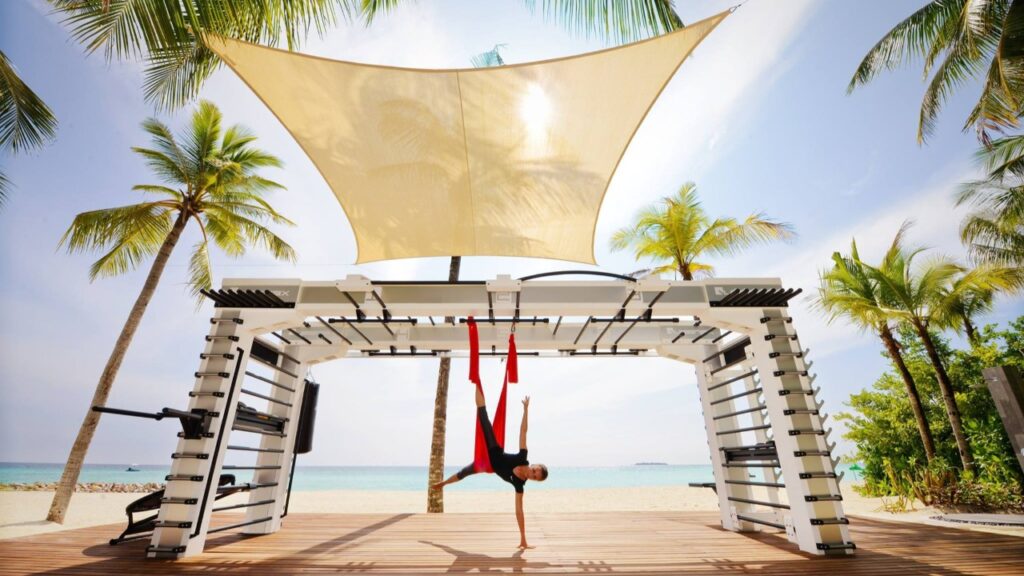
Not a playground. Not a workout park. A professional outdoor strength zone - the same equipment a serious user would expect indoors, engineered to live permanently on a pool deck.
What "outdoor gym" actually means at a water park
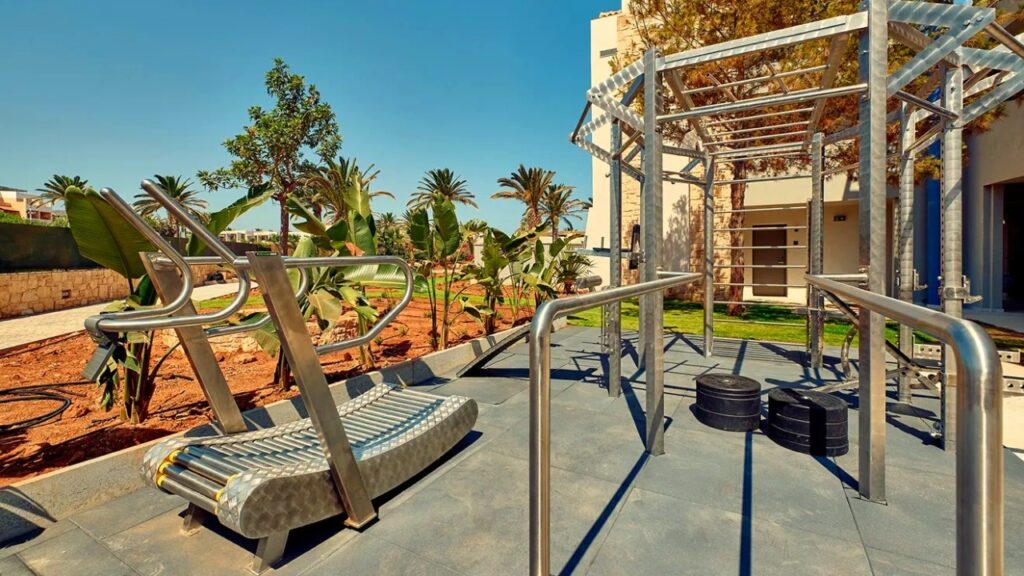
A defined zone on or near the pool deck. Professional machines with adjustable resistance - so a first-time guest and a competitive athlete use the same equipment, calibrated differently. Built from structured stainless steel so chlorine, sun, snow, and salt air don't matter. No power required. No staff. No instructors.
- ✓Professional-grade, not playground-grade equipment
- ✓Adjustable load - fits every demographic from beginner to advanced
- ✓Permanent outdoor installation, 21+ year service life
- ✓Zero operational cost - no electricity, no staff, no consumables
- ✓Works rain or shine, summer or winter
The Business Case
What this actually does for your operation.
Forget aspirational language. Four concrete operational outcomes - measurable in your existing KPIs.
Longer time on property
The single biggest predictor of per-guest spending in water leisure. An outdoor gym gives fitness-oriented adults a reason to stay past lunch - extending the average visit, and the average ticket, into the evening hours.
Broader demographic reach
Water parks skew young families. An outdoor gym captures the missing adult and 14+ teen segments - exactly the demographics with disposable income, return visit potential, and longer average stays.
Zero ongoing operational cost
No electricity. No instructors. No consumables. No daily setup or breakdown. Equipment runs itself - once installed, the only ongoing cost is the same routine maintenance you already do for pool deck infrastructure.
Competitive differentiation
This is still a category most operators haven't entered. Being the first water park in your region with a professional outdoor gym is a positioning advantage that compounds - in PR, in reviews, in repeat visits, in pricing power.
The Guest Perspective
What guests actually experience.
"
I came for the thermal pools. I ended up training every morning before breakfast. We extended the trip by a day.
Guest testimonial from Termy Uniejów
An amenity, not a playground.
The guest experience is closer to a hotel spa than to anything you'd associate with the words "outdoor gym." Equipment looks and feels professional.
For fitness-oriented guests, this transforms the property from "place we go for an afternoon" into "place we plan a long weekend around." For wellness travelers, it completes the picture - pool, sauna, strength. For multi-night hotel guests, it removes the reason they were going to drive somewhere else.
And critically: it works for guests who don't use it. The signal that the operator takes adult wellness seriously raises the perceived quality of everything else on the property.
Proof
It's already running.
Seven Wonders of Poland
National Geographic Traveler
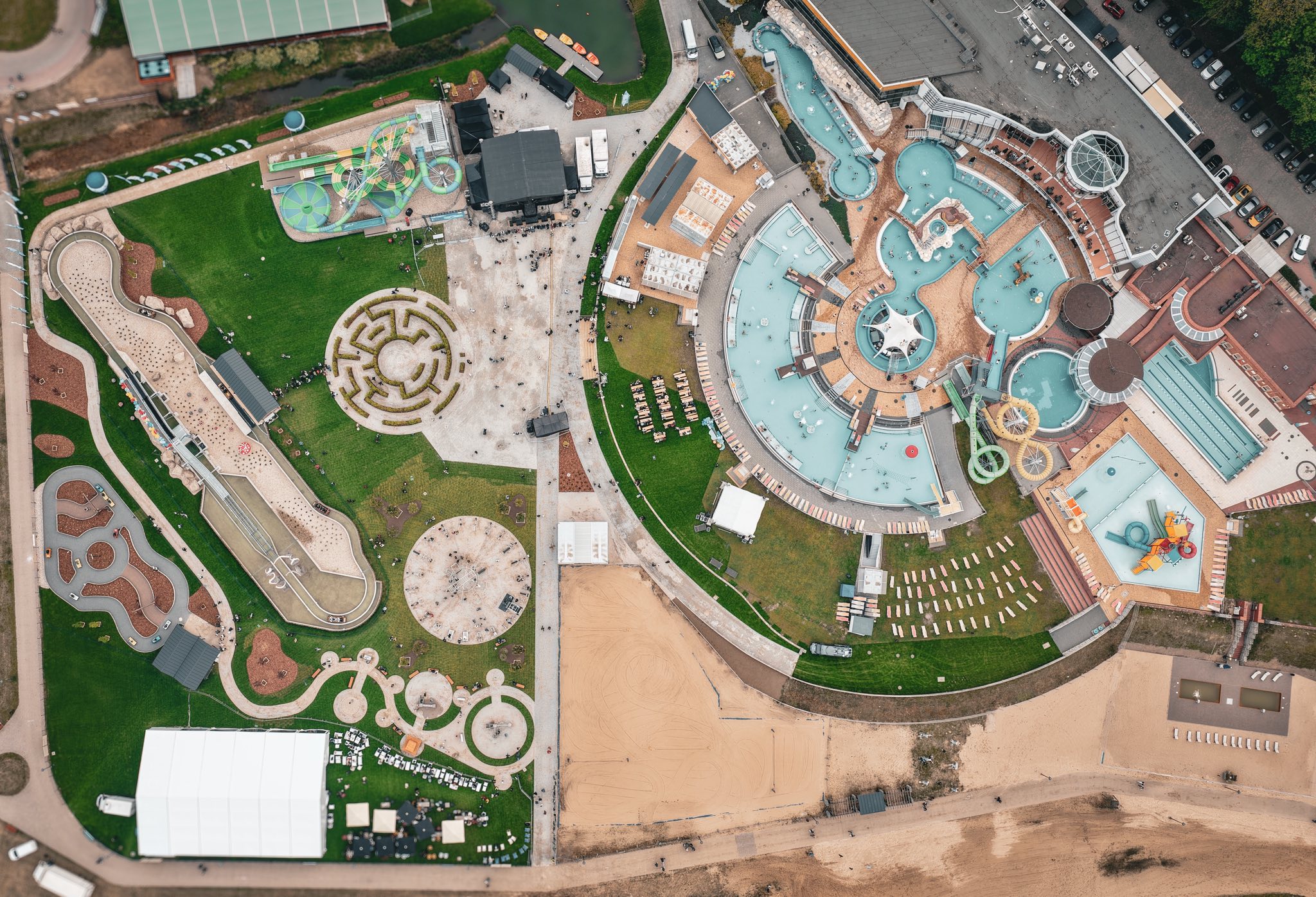
Termy Uniejów - Poland's leading geothermal aquapark and thermal spa, recognized by National Geographic Traveler - runs a full Ive Outdoor strength zone on its pool deck. Open year-round, day and night, no power required, no staff needed.
See the full case study →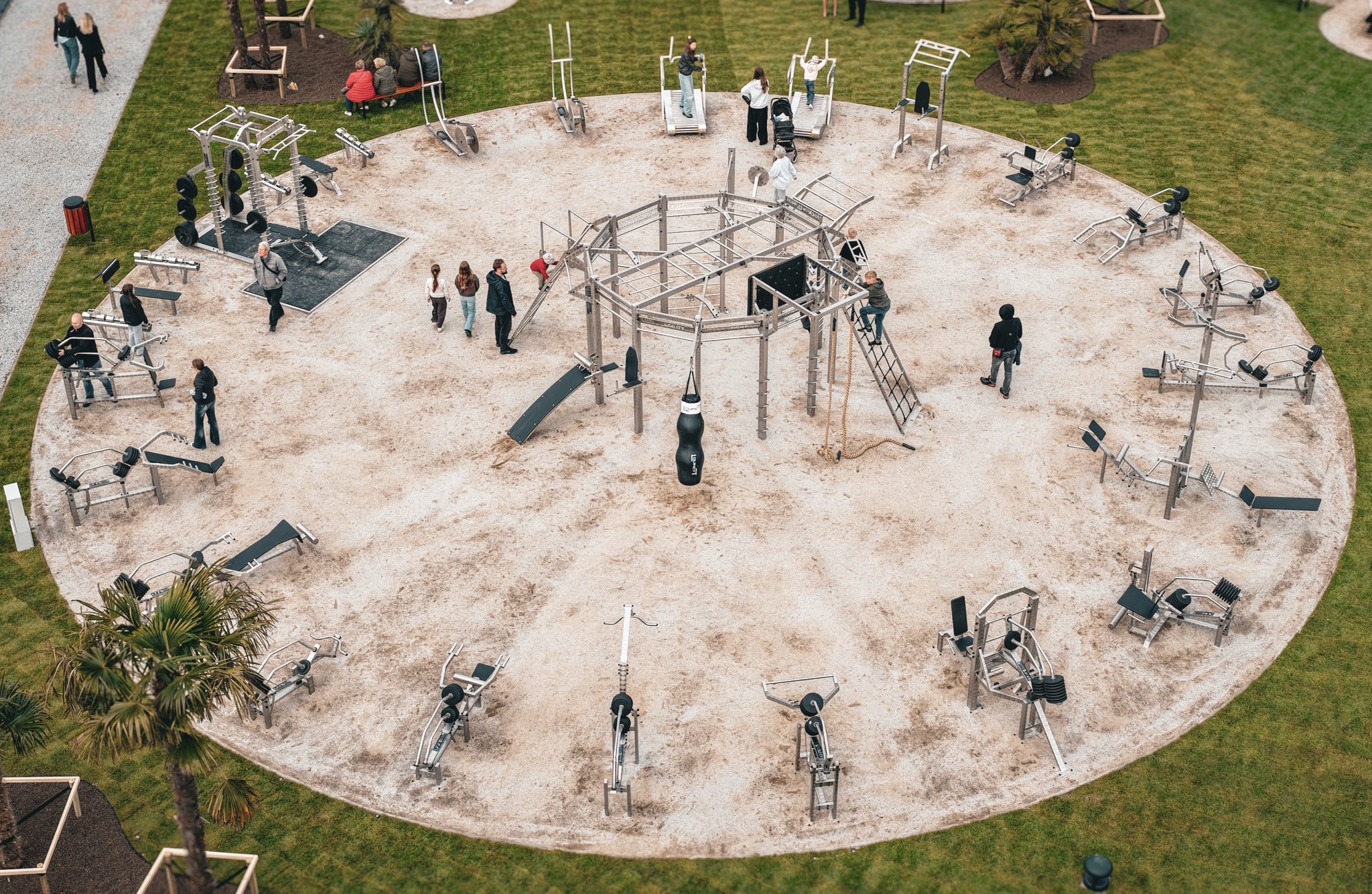
Common Questions
Questions every operator asks first.
Q.Will it survive year-round outdoor exposure - chlorine, sun, snow, salt air?
Yes. The equipment is built from structured stainless steel specifically for permanent outdoor installation. Service life is 21+ years in continuous outdoor use. The same machines are running in coastal resorts, mountain destinations, and chlorinated pool environments without protective shelters.
Q.Do we need to add staff, instructors, or a separate operator?
No. The equipment is designed for unsupervised use by adults - same operational model as a hotel sauna or a pool deck. No staff required, no instructors, no consumables, no power. Once installed, it runs itself within your existing facility management.
Q.How much space does it actually take?
A complete strength zone needs roughly 100-150 m² for 8 machines covering the 8 main muscle groups. Larger gyms with 20-30 machines need 300-600 m² depending on configuration. That's typically less than a single water slide footprint, and significantly less than a kids' splash area. Most water parks find the space without sacrificing existing attractions.
Q.What about guests who don't know how to use the equipment?
The machines use adjustable resistance with intuitive seat and grip positioning - designed so first-time users can figure them out without instruction. Most installations include outdoor-rated signage with clear visual guides for each station.
Q.Does it work in cold climates?
Yes. The equipment is rated for full European climate range - from coastal Mediterranean to continental winters with snow and freezing temperatures. Stainless steel construction handles temperature swings without degradation. Guests can train year-round, including in winter at thermal spa destinations.
Q.What's the typical project timeline and process?
From first contact to installed equipment: typically 4-8 weeks depending on configuration and shipping destination. We work directly with the facility's project lead, with no requirement for a separate contractor or specialized installation crew. The equipment ships globally from our Poland / EU production facility.
Next Step
Let's talk about your facility.
Send us a few details about your aquapark, water park, thermal resort, or wellness destination. We'll come back with configuration options, equipment recommendations, and pricing tailored to your market.